
Mind & Brain · Giftedness
Living with giftedness – when thinking moves faster than the environment.
Giftedness is more than a high IQ. It can mean recognising connections earlier, thinking in more complex ways, learning unusually fast and looking at problems from perspectives that others do not see at first.
Book a conversation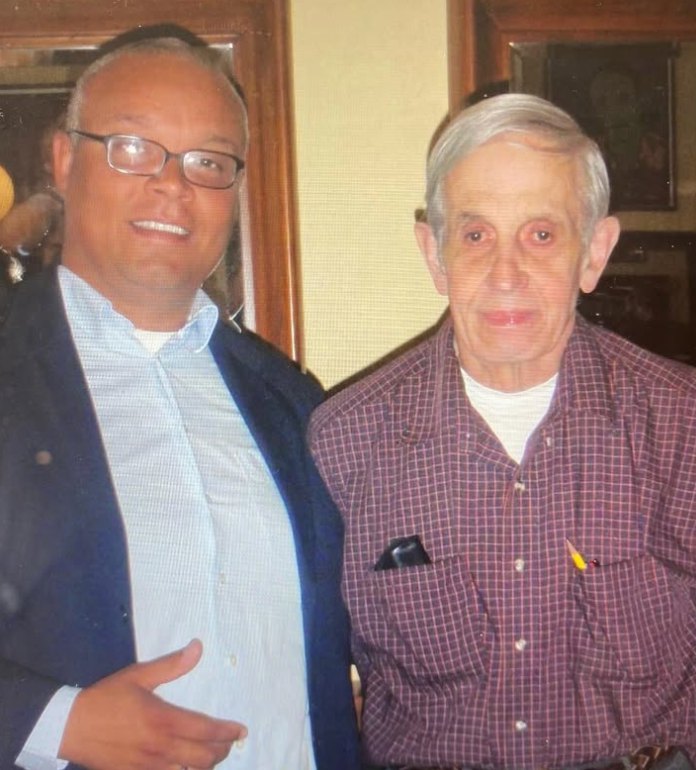
When thinking moves faster than the environment
What begins as a strength can also become a challenge in everyday life: being under-challenged, boredom, perfectionism, high self-expectations, social friction or the feeling of not quite belonging can accompany highly able people for years.
The decisive question is therefore not only: “How intelligent am I?” But rather:
“How can I use my abilities to build a coherent, capable and fulfilling life?”
John Nash – when exceptional thinking looks for its own path
John Forbes Nash Jr. stands like almost no one else for the extraordinary power of independent thinking. The American mathematician completed his doctorate at Princeton as early as 1950 and received the Nobel Prize in Economic Sciences in 1994 for his fundamental work on game theory.
At the same time, his story shows that exceptional cognitive ability does not automatically make life easy. Ability, personality, relationships, mental stability, professional demands and social expectations all have to fit together.
This is exactly the intersection where the work of TAF180 begins.
Understanding giftedness – instead of only measuring it
An intelligence test can provide important information. It does not, however, explain the whole person. At TAF180 the aim is therefore to understand the person behind the ability.
Everyday life
What does high cognitive ability actually mean day to day?
Being under-challenged
Where does under-stimulation arise – at school, at university or at work?
Performance expectations
What expectations are placed on your own performance?
Switching off
Why is it sometimes so hard to switch off?
Perfectionism
How can high standards and perfectionism be regulated?
Relationships
How can relationships succeed when thinking and perception differ strongly?
Work environment
Which professional environment fits your abilities?
Potential without pressure
How can exceptional potential be used well without turning into permanent pressure?
Giftedness does not need to be “treated”. Living with it, however, may well need support.
Why Thomas Alexander Frank can be the right person to talk to
Prof. Dr. phil. Thomas Alexander Frank combines several perspectives that are particularly valuable for the complex questions surrounding giftedness.
He is a qualified occupational therapist, holds a doctorate in rehabilitation sciences and is Professor of Educational Psychology & Health Care Management. Added to this are more than three decades of practical experience in psychological therapy, occupational therapy and counselling.
Psychology
How do high standards, self-image, stress and emotional strain affect your life?
Neuropsychology
How do attention, concentration, memory and cognitive performance work – and how can they be used well in everyday life?
Work and performance
How can you find a professional environment in which high ability leads neither to permanent overload nor to boredom?
Relationships and family
How do you deal with thinking, feeling or communicating quite differently from the people around you?
Meaning and life design
And finally, perhaps the most important question: what should come out of your abilities?
TAF180 works with the 180° model, which connects the perspectives of need, ability and meaning. The model was developed in 1999 in the context of rehabilitation sciences at the Humboldt University of Berlin.
Not higher, faster, further – but more coherent
Highly able people are often told that they should “make more of their potential”. At TAF180 the idea is a different one:
You do not have to keep achieving more. You may learn to use your particular abilities in a way that fits your own life.
Because intelligence alone does not answer the question of a good life. It is about balance between performance and recovery, thinking and feeling, individuality and relationship, ambition and self-acceptance.
Giftedness in children, adolescents and adults
Giftedness can raise very different questions at different stages of life.
Children and adolescents
Being under-challenged at school, fitting in with peers, performance pressure, conflicts with parents or teachers, and the search for suitable support.
Students and young adults
Choice of studies, orientation, motivation, procrastination, perfectionism and the question of which career path matches your abilities.
Adults
Professional dissatisfaction, overload, leadership responsibility, relationship topics, life transitions or the feeling of not being in the right place despite great ability.
At TAF180, living with giftedness belongs to the Mind & Brain area and is closely linked to topics such as ADHD and ADD, concentration, learning difficulties and cognitive performance.
Frequently asked questions about giftedness
Is giftedness the same as a high IQ?
No. A high IQ is only one part of the picture. Giftedness can mean recognising connections earlier, thinking in more complex ways, learning very quickly and seeing problems from perspectives others do not see at first.
Do I need an intelligence test before a conversation?
No. An intelligence test can provide important information, but it does not explain the whole person. The focus is on the person behind the ability.
Does giftedness need to be treated?
Giftedness is not an illness and does not need treatment. Living with it may nevertheless need support – for example with under-stimulation, perfectionism, exhaustion or social friction.
Which age groups is this support intended for?
Children and adolescents, students and young adults, as well as adults in professional and leadership roles. The questions differ considerably from one stage of life to the next.
Which topics are typically discussed?
Being under-challenged, high self-expectations and perfectionism, difficulty switching off, relationships and communication, the right work environment, and how to use potential without permanent pressure.
Where does the support take place?
Prof. Dr. phil. Thomas Alexander Frank and the TAF180 team work with people in person in Zurich and Berlin, and online worldwide.
Your ability is a part of you – not your whole identity.
Perhaps you are not looking for another increase in performance. Perhaps you would finally like to understand why you think differently, why certain situations demand so much of you, or how you can integrate your abilities meaningfully into your life. A personal conversation can be exactly the first step.
Book a conversation →ADHD & ADD Coaching Career & Direction Burnout & Stress Coaching
